Before Redemption: The Power of Presence in Pain
Video Available: https://www.youtube.com/watch?v=lkXb1YZZL-U
Before Redemption: The Power of Presence in Pain
Before the miracles of redemption could begin, God first chose to see, hear, and know the suffering of His people — teaching us that the most transformative gift we can offer those in pain is not a solution but our presence, the sacred willingness to sit with them and help them feel less alone.
When someone we love is suffering—whether from grief, anxiety, trauma, or depression—our instinct is almost immediate: fix it. We reassure, advise, distract, or try to pull them out of their pain. It is well intentioned and often comes from caring. But more often than we realize, it misses what is most needed.
People in pain are not first asking to be rescued.
They are asking not to feel alone.
Long before modern psychology articulated this truth, the Torah placed it at the very beginning of redemption itself. At the turning point of Jewish history, as Am Yisrael suffer under Egyptian bondage, God does not begin with miracles. Instead, the Torah describes a sequence of attention:
"God heard their groaning (Shemot 2:24)…God saw the children of Israel, and God knew (Shemot 2:24-25)."
Again at the burning bush, Hashem says to Moshe:
"I have surely seen the affliction of My people… I have heard their cry… for I know their pain (Shemot 3:7)." The language is striking in its progression: seeing and hearing, then knowing. Before salvation, there is recognition, connection, and an empathetic relationship.
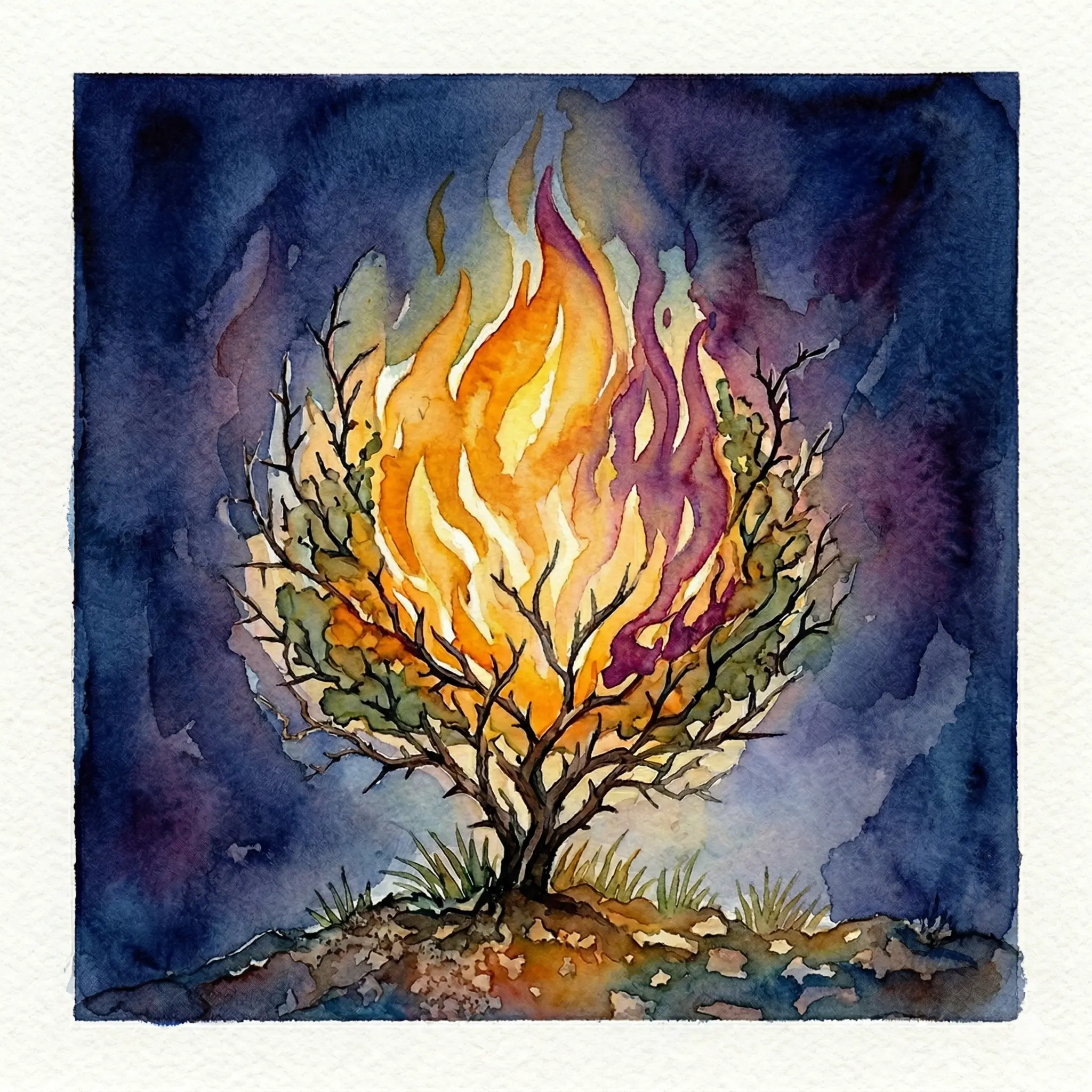
God does not stand outside suffering, He is in it with us, as depicted in the initial divine revelation at the burning bush. The image of the malach Hashem, angel of God, is found in the flames from within the bush (Shemot 3:2). The flames represent the suffering under Egyptian tyranny, and the people of Israel are the lowly but hardy bush which is not consumed. The Godly angel then is found right in the middle of the suffering. Rashi points this out with the phrase from Tehillim (91:15) – "עמו אנוכי בצרה" — "I am with him in distress." God is found with us in our suffering. And then He redeemed us.
This idea reverberates throughout Jewish tradition. Rabbi Meir teaches that when a person suffers, the Divine Presence itself says, "My head is heavy, My arm is heavy" (Sanhedrin 46a), expressing a radical notion: human pain is not merely observed by God—it is, in some sense, shared. This theological stance becomes a human obligation. The ability to sit in silence with someone in their suffering is part of the halacha of visiting a mourner (learned from Iyov's three friends who remained silent for seven days). The role of the comforter is not to offer platitudes or words of solace, or even attempt to remove pain, but simply to give space for it, to be present with it and help the individual feel seen, heard and on some level, known.
This idea is beautifully expressed in the Rabbi Nachman story The Turkey Prince, a profound tale about healing, identity, and empathy. In short, a prince decides he is a turkey, refuses to wear clothes, and insists on sitting under the table, pecking at crumbs as a turkey does. The king is at a loss. All the best doctors are brought to cure the prince but none of them succeed. A sage arrives with promises to cure the prince. He sees the turkey prince under the table and instinctively removes his own garments, sits under the table with the prince, and acts like a turkey alongside him. Eventually the sage convinces the prince to wear clothes, then to eat regular food, and finally to sit at the table, while allowing the prince to remain in the mindset of being a turkey. Eventually, the prince recovers and begins to take on the role of a prince in the fullest capacity.
By validating his experience, even if he does not agree with it, the turkey prince felt seen, heard and known. The power of empathy can help many people to feel less burdened by their personal woes and modern psychology has arrived at the same conclusion.
The humanistic psychologist Carl Rogers identified accurate empathic understanding as one of the most powerful forces in healing. Change, he argued, does not occur primarily through advice or correction, but when a person feels deeply understood—when someone is willing to enter their inner world without judgment. A dysregulated nervous system cannot simply be reasoned with; it must first be soothed through connection.
In this light, the Torah's language reads almost like a clinical model. To "see" is to notice distress. To "hear" is to listen to their story. To "know" is to enter, as much as possible, the lived experience of another. And to say I am with you in your suffering, you are not alone, is to build the bridge that makes healing possible. Certainly this does not mean that we don't want to create change or that action is unnecessary. The book of Shemot continues to tell us the story of liberation. But the Torah is precise about order—presence comes first, redemption follows.
The same is true in human relationships. When we rush to fix, we often bypass the person. When we slow down enough to accompany—to truly see, hear, and know—we create the conditions in which change can actually occur. To sit with someone in pain is not a passive act. It is, perhaps, the most demanding form of love and it is a therapeutic tool. It requires resisting the urge to control, explain, or resolve.
It asks us instead to simply be, to see, to listen, to feel.
In doing so, we imitate not only a humanistic psychology model, but a divine one.
Originally published on Matan.
Related Articles
You might also be interested in these teachings
Nissan: The Developed Craft of Emunah
Emunah (faith) shares its root with uman (craftsman) — because faith is not a state we arrive at but an art we practice, refine, and transmit across generations, especially at the Pesach seder where we relive the Exodus with our whole selves.
Read MoreThe Path to Nobility
Like Nachshon ben Aminadav who plunged into the sea before it split, Nissan invites us to walk through vulnerability — crossing our personal waters with the emunah (faith) and bold courage we have inherited from Yehuda.
Read MoreFighting Indifference
Esther acted without guarantees, entering the king's court before knowing how the story would end — and Taanit Esther teaches us to do the same: to fast, gather, and refuse indifference while we still stand inside the tension of waiting.
Read More