Healing Our Wounds
Video Available: https://www.youtube.com/watch?v=Zl5hI0ed_7c
Healing Our Wounds
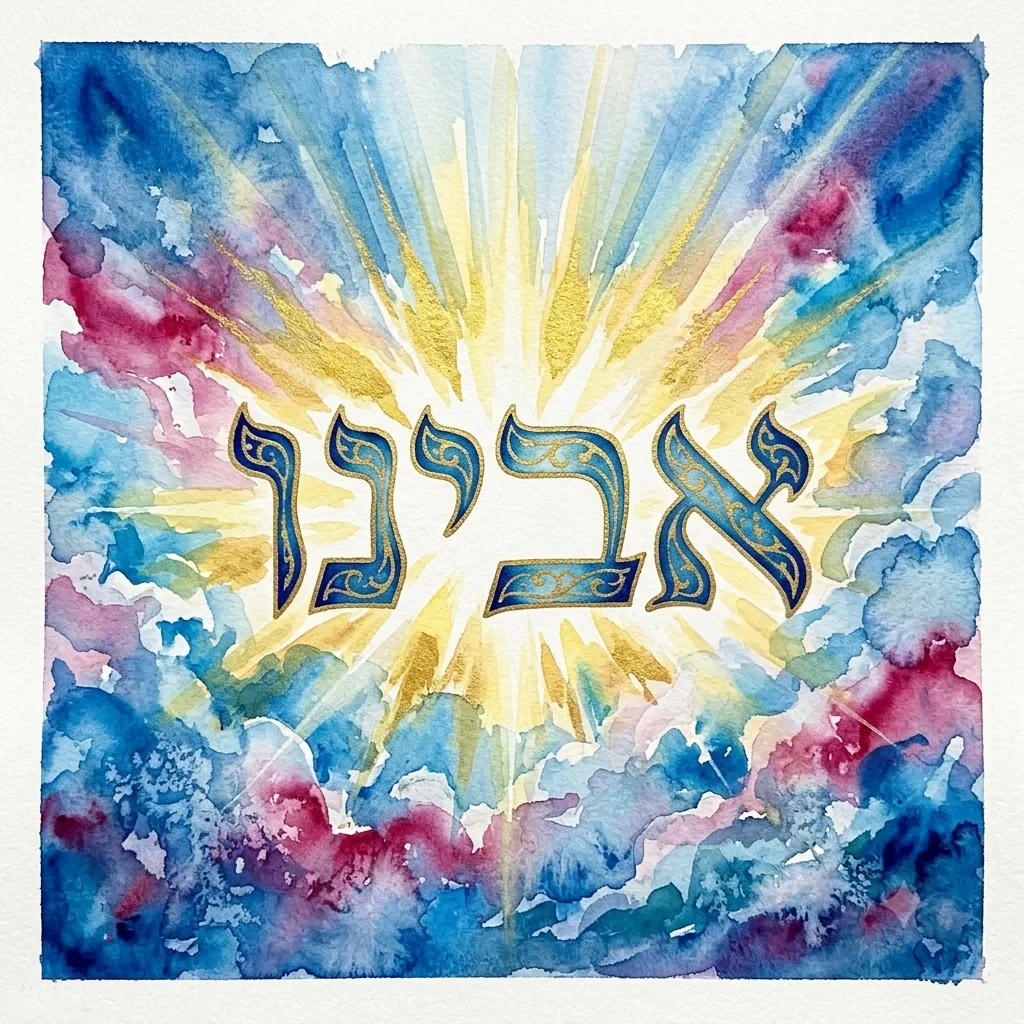
In Av — the month whose very name means Father — we discover that honoring our imperfect parents carries a promise deeper than long life: arukhah (healing), the slow closing of the wounds we all carry, and a softening of how easily the word Avinu, our Father, forms in our mouths.
Honor Your Father and Mother
If asked to divide the Ten Commandments, you will likely do it instinctively. Split down the middle: five as we relate to God, and five as we relate to other people. It seems perfectly balanced, and it is almost right. Until you look at commandment number 5. There on the first tablet, with all the mitzvot bein adam laMakom, between individuals and God, sits Honor your father and your mother — two human beings, with names and tempers and limitations, standing on the tablet reserved for the Divine.
An explanation can be found in the gemara (Kiddushin 30b, Niddah 31a) which teaches that there are three partners in the creation of a person: the Holy One, the father, and the mother. When a child honors his parents, God says: I consider it as though I dwelt among them and they honored Me. We glean from this that there exists an inherent correlation between the relationship we develop with our parents, and that which we develop towards God. In Av we mourn that God is without a home. Without the Beit Hamikdash, God does not have a dwelling place in this world. Yet this very gemara also tells us that Hashem dwells in the family home when there is respect and honor that the offspring show to the parent. This mitzvah is certainly not limited to children living in their parents’ home, and even after one’s parents have passed away there are ways to honor them through our speech and actions (see Shulchan Aruch, Yoreh De’ah 240:9). While we pray for the permanent dwelling place to be built, we can also create a home for God in this world through our thoughts and behavior towards our parents.
Long Life
In the middle of Av—the month whose name means Father—we encounter, on Shabbat Nachamu, the commandment we first read earlier in the year in Shemot (20:12): “Honor your father and your mother”—לְמַעַן יַאֲרִיכֻן יָמֶיךָ וּלְמַעַן יִיטַב לָךְ—”that your days may be lengthened, and that it may be good for you in the land that God is giving you” (Devarim 5:16)
The Gemara in Kiddushin (39b) tells of Elisha ben Avuya — remembered ever after only as Acher, “the Other” — who watched a boy climb to fulfill the mitzvah of sending away the mother bird, at his father’s request, only to fall, and subsequently die. The child had been fulfilling two mitzvot bearing the very same promise of long days, and yet he did not live out the afternoon. Witnessing this tragic event led Acher to steer away from his religious beliefs and practices. His grandson, Rabbi Yaakov, held that the promise was never about this world at all, rather it was about the world to come: L’olam shekulo tov — a world that is entirely good. L’olam shekulo arokh — a world that is entirely long.
A Closing of Wounds
I believe that Rabbi Yaakov’s answer has comforted many yet has fallen short for many others. What was Hashem promising when He said that it will be good for you and your days will be aruchin, in the land that God is giving you? What if arichut means more than a measurement of time?
Our answers lie in the Tanakh. In Yirmiyahu, in his chapters of consolation, God promises:
כִּי אַעֲלֶה אֲרֻכָה לָךְ וּמִמַּכּוֹתַיִךְ אֶרְפָּאֵך
For I will bring up healing (arukhah) for you, and from your wounds I will heal you (Yirmiyahu 30:17)
Arukhah is a form of healing. Arukhah is flesh knitting slowly closed over a tear. In Yishayahu the word is used again, to implore us to be kind to one another. That fast days like the 9th of Av, are not just about abstaining from food and drink, rather God says:
“This is the fast I desire…
It is to share your bread with the hungry,
And to take the wretched poor into your home;
…
Then shall your light burst through like the dawn
And your healing spring up quickly — ואֲרֻכָתְך מְהֵרָה תִצְמָח”
(Yishayahu 58:6-8)
Perhaps, then, arichut yamim are not only long days but healed days.
Healing
We don’t ever graduate from being someone’s child. At every age and stage, we are commanded to honor. We all carry some wounds from our parents. Every one of us. No mother or father has ever been anything other than a mere mortal, and we are all are limited, myself included. Parents can try their best, loving their children in whatever language and with whatever tools they happen to possess. Yet they will inevitably cause some pain. Some wounds are so small we have never given them a name and some may be deep craters. But no one is left unscathed.
The ironic part is that the healing comes as a result of the honoring. It is not a prerequisite; it is a natural consequence. With the pain, the disconnect, the unmet expectations, honor your parents. It may mean grieving what will not change and what cannot be repaired. And with that, find ways to honor. None of this requires a conversation. Some parents cannot hear it. Some are no longer in this physical world. This work is done in the heart. If we can work through our own limitations to fulfill kibud av v’em, the verses teach us, it will provide goodness and healing for us.
Avinu
As we learnt in the Gemara Kiddushin, there is a direct correlation between honoring our parents and honoring God. Our relationship with Hashem can be affected by our parental relationships. “Have we not all one Father?” asks Malachi (2:10). To make peace with the imperfect human father and mother we were given is to soften something in the way we stand before the Father we share. Our first experiences of our parents will shape, for better or for worse, how easily the word Avinu forms in our mouths.
As we move from Av to Elul, we’ll begin to prepare for the High Holy Days of Tishrei (Rosh Hashana and Yom Kippur), where we will beseech Avinu Malkenu, Our Father and King. May this Av be a month of arukhah — where we honor God by honoring our parents and bring deep healing.
Originally published on Matan.
Related Articles
You might also be interested in these teachings
The Peacemaker's Paradox: Finding Wholeness in the Month of Av
The Temple fell to baseless hatred, yet God placed the yahrtzeit of Aharon — the great lover of peace — at the very threshold of Av, offering us both the wound and the remedy in the same breath.
Read MoreGrieving and Growing
Eicha's ordered acrostic structure sets limits on grief without denying it — mirroring the truth that loss does not shrink but new life grows around it, and we can be whole again, even if never the same.
Read MoreLove and Justice: Faithfulness Can Bring the Redemption
Faithfulness (ne'eman) bridges the six days between Tisha B'Av's mourning and Tu B'Av's joy, teaching us that when we build faithful homes we lay the groundwork for the city of justice and redemption the prophets envisioned.
Read More