Sivan: The Wisdom of the Desert
Video Available: https://www.youtube.com/watch?v=UQsSrayD6S8
Sivan: The Wisdom of the Desert
When we picture Sivan we rush toward the thunder of Har Sinai, yet the Torah was given in a barren desert — and maybe that emptiness is the point, teaching us that emunah (faith) grows only when we loosen our grip on the images we've built of how life is supposed to look and leave open space for God to enter.
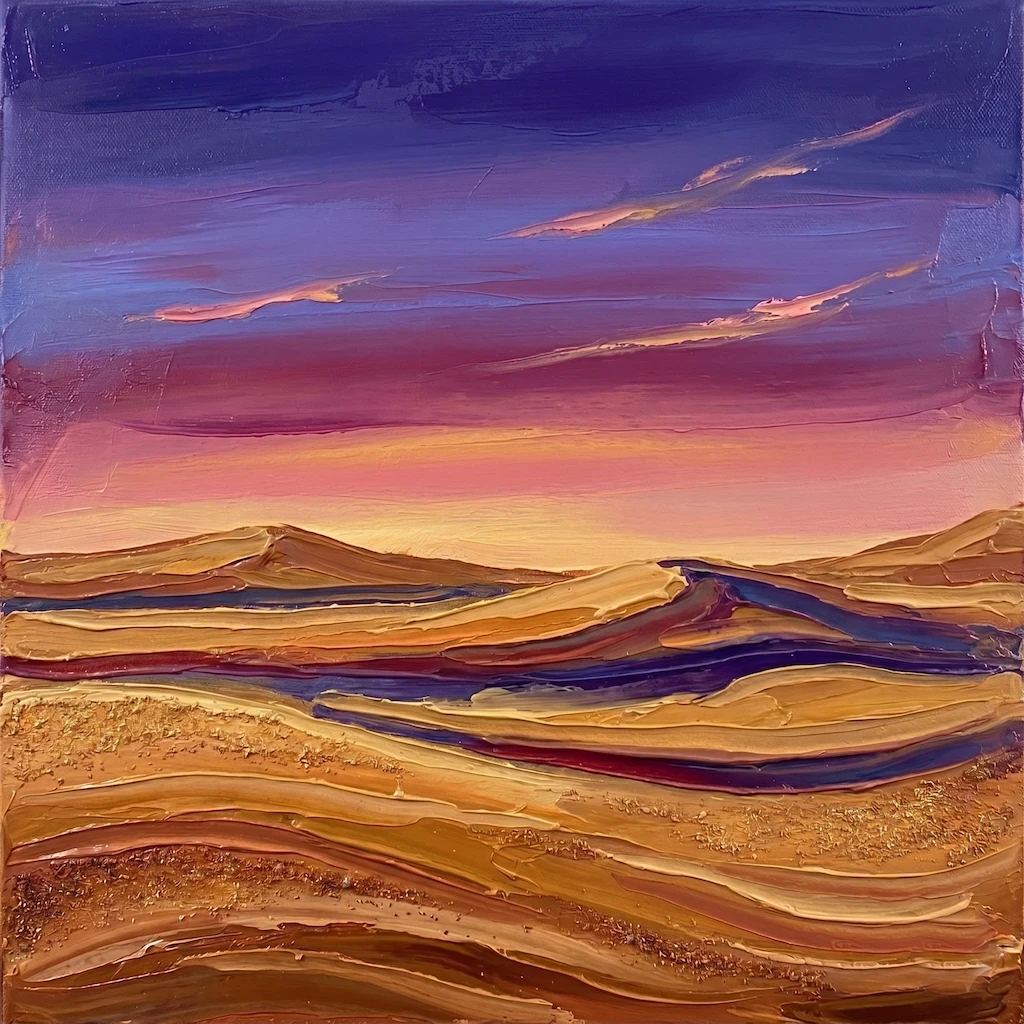
Uncluttered Reality
When we think of the month of Sivan, our minds naturally turn to Matan Torah. We imagine the dramatic moment at Har Sinai, the thunder and lightning, the revelation that changed the course of Jewish history. Yet Shavuot occupies only a brief moment within the month. The larger landscape of Sivan is something else entirely.
Each year, just before Shavuot, we read Parshat Bamidbar. The Torah could have been given anywhere—in a populated city or in a fertile land. Instead, it was given in a desert, a place defined by lack. There are no landmarks or distractions competing for our attention. There is only open, unadulterated space.
The expansive desert stretching out before Am Yisrael lacks structure and teaches us something timeless. That openness reflects a state of being. It is akin to the primordial "tohu vavohu" as Rashi on the verse (Bereishit 1:2) says, an astonishment at the emptiness, desolation, and vacant space. A mind full of certainty cannot learn, much as a heart cluttered with expectations cannot receive. Perhaps that is precisely why the Torah had to be given there.
Make No Images
The second of the ten commandments stated at Sinai warns against creating false images and idols. On the most literal level, it prohibits physical representations that replace our relationship with God. But perhaps there is a deeper psychological lesson embedded within them as well.
Human beings are constantly creating images.
We create images of how our lives are supposed to unfold. We imagine how our careers will develop, and our homes will look, how our marriages should function, how our children will behave, our communities will feel, friends and family will support us, and the list goes on. These mental pictures often become idols of a different sort.
The problem is not that we have hopes or dreams. The problem begins when we become attached to the image itself. We stop seeing reality as it is and instead compare it relentlessly to the pictures in our minds, or on social media. The greater the gap between reality and our expectations, the greater our disappointment, resentment, anxiety, and frustration.
Traveling Without an Itinerary
Further on in the book of Bamidbar, just a couple of weeks after Shavuot, we read about how the generation that left Egypt lived with extraordinary uncertainty. They traveled under the guidance of the Amud Anan by day and the Amud Aish by night. The cloud would lift, and they would travel. The cloud would settle, and they would camp. Sometimes they remained in one place for a long period; sometimes only for a short time. "Whether it was two days or a month or a year—however long the cloud lingered over the Mishkan—the Israelites remained encamped and did not set out; only when it lifted did they break camp (Bamidbar 9:22).
They never knew in advance what would happen next.
The pesukim emphatically repeat three times in a short span (ibid. verses 18, 20, 23)—that according to Hashem they would encamp, and according to Hashem they would journey.
Their task was not to know where they would be next month. Their task was to pay attention to where God was leading them today and this may be one of the most difficult practices of all.
We crave certainty. If only life would give us some guarantees. The desert strips away the illusion that we are in charge. It reveals how little we actually control and how much energy we spend trying to manage and mitigate.
The Midbar is not merely an empty place, rather it is a place which reminds us to empty ourselves of our preconceived notions, of our "five year plan," our perfect job, family or vacation. When we let go of these false images, when we stop seeking to conform reality to what we've idolized in our imagination and learn to open ourselves to the vast, unlimited potential, we create a space where God can enter. We become available to encounter real blessings in our life. When we stop insisting that life be what we imagined, we might discover that what we receive is far richer and more meaningful than anything we could have planned for ourselves.
Originally published on Matan.
Related Articles
You might also be interested in these teachings
Sivan: A Month of Threes
Sivan's zodiac sign is twins — the number two — yet the month carries a three-part Torah for a three-part nation, and the invitation of Shavuot is to invite God into our relationships and transform every pair into something stronger and more whole.
Read MoreHealing Our Wounds
In Av — the month whose very name means Father — we discover that honoring our imperfect parents carries a promise deeper than long life: arukhah (healing), the slow closing of the wounds we all carry, and a softening of how easily the word Avinu, our Father, forms in our mouths.
Read MoreTammuz and the Challenge of Not Knowing
Tammuz opens in the ache of not-knowing — the very intolerance of uncertainty that once pushed our ancestors toward the golden calf — yet its deeper invitation is to build the spiritual muscle that lets us wait, with emunah (faith), even when the answers have not yet come.
Read More